Jamia Alumni Forum

Subscribe to Jamia_Alumni_Forum

Powered by us.groups.yahoo.com

Saturday, July 2, 2016

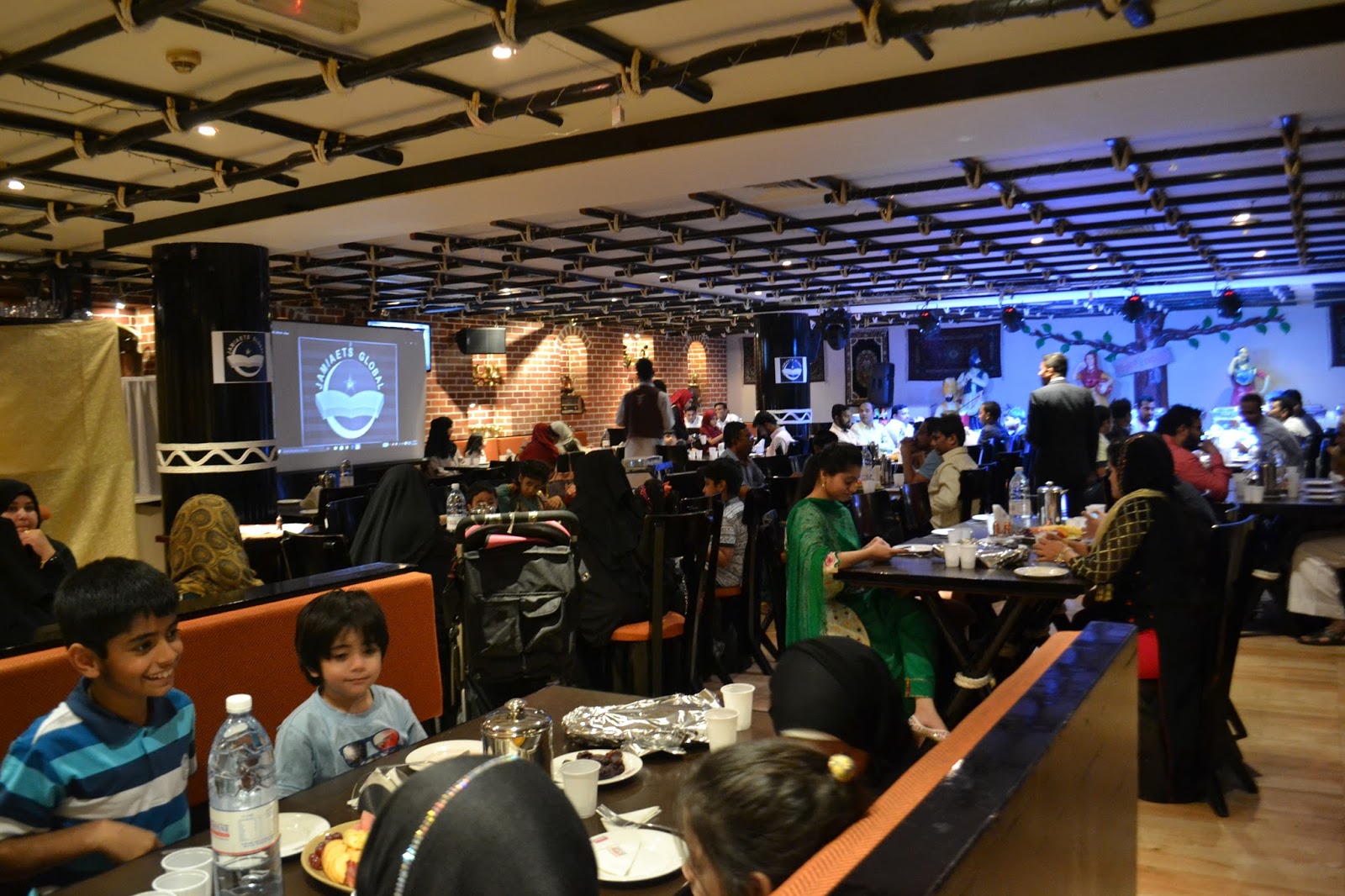
Jamiaets Global Iftar cum Dinner on 24.06.16 in Dubai, UAE

Jamiaets Global- Iftar cum dinner 24.06.16

During an iftar cum dinner program hosted by Jamiaets Global- An Alumni forum of Jamia millia islamia on 24th June 2016 at Dubai Grand Hotel-Dubai, JG has announce the launch of Alumni web portal powered by AlmaConnect the largest alumni based service provider in south east Asia.
Jamiaets Global, the first overseas Alumni Forum of Jamia Millia Islamia was formed in 1994 has started many initiatives for the benefits of Alma mater to its fold.
It flourished and successfully brought alumni together and encouraged alumni worldwide to initiate local chapters.
The current unique initiatives of web portal part of JG’s commitment to create a platform to knit not only JMI alumni but faculties & students of Jamia Millia Islamia in one go.
The web portal has following main features for the benefit of JMI alumni,
• Maintain & download of alumni database.
• Options for alumni, faculty & students to sign up.
• Invitation system to become member.
• Identity verification during sign up through Linkedin & Facebook.
• Profile Management of Alumni/ Faculty.
• User Directory (Browse/Search feature).
• Sharing of Information between alumni, faculties & University.
• Commenting, like and other basic social networking options available.
• Events: An event can be created and invitations can be sent.
• Private Message: A user can send / receive private message.
• Groups feature available for academic/ knowledge sharing & mentorship purpose.
• Memories: Collaboration of pictures. People can request other and upload pictures of events that happened during college in the past.
• Employment: The portal will connect employers & jobseekers, all JMI alumni together.
• Newsletter.
The initiative of web portal has backing of many senior jamiaets and Prof. Talat Ahmad, vice chancellor of JMI, excerpts of his message was,

The program was attended by more than 200 alumni (Engineers, Businessman, sales & marketing professionals, Architects etc) with their families & they were delighted to meet & interact with fellow jamiaets.
As continuous efforts of JG towards education of less fortunate back home, An appeal was made to come forward & join hands with EDUCAID (the organization works to provide education to financially weaker section of society).
The core committee & founding members of Jamiaets Global, Zubair Irshad, Zakir Ataur Rehman, Gheyasuddin Azmi & Muzaffar Ali beg greeted the gathering and talk about many initiative that JG has to take for the Jamiaets in the region & worldwide.
Following are the moments captured. Screen shot of launched web portal
 www.jmiAlmaConnect. com


Sunday, November 28, 2010

Restoration of Talimi Mela-online petition

To, 28.11.10
Mr.Najeeb Jung
Vice chancellor
Jamia Millia Islamia

Subject: Restoration of Talimi Mela

Sir, we are Jamia Alumni who have spent a considerable part of our life at Jamia Millia Islamia and some of us were associated with the students movement during our stay at Jamia. Having seen Jamia through its various trials and tribulations, we remain ever committed to the development of a vibrant academic environment in the Jamia, yet at the same time, maintaining its unique traditions and culture.

Sir, as might be aware, Jamia Millia Islamia, since its birth, has been an institution with a difference. It is not just an educational institution but also a movement. It is probably one of the few universities, where students are admitted in kindergarten and can continue in this institution till their PhD, the highest academic degree thereby creating a unique Indian personality. In short, it does not just impart bookish education; rather it teaches a way of life. From its inception during Khilafat movement, Jamia has indeed come a long way over the years, to become a world renowned university. However, it is important that some important traditions are not forgotten.

When Jamia was born, there were a small group of people associated with Jamia. There was great bonding between them, and they all lived as part of one large family, all were part of one "Jamia Biradari." Among various program and activities, Talimi Mela has been one of the important events that strengthened the concept of “Jamia biradri” (Jamia family). Over the years the number of people living in Jamia has increased several times, but "Talimi Mela" is perhaps the only institution which still promotes the concept of "Jamia Biradar where students from all faculties and departments come together. Not just students, but even faculty members, non-teaching staffs, alumni, all converge on one platform to promote a "Pan Jamia" feeling of bondness, of unity, that we all belong to this great institution. In fact, Talimi Mela has gained a status of a religious festival for Jamia Millia Islamia, a festival that always brings a lot of happiness, fun, knowledge sharing, competitions, symposium, seminars and gathering of lost friends. This apart, organizing the "Talimi Mela" is an amazing learning experience for students who participate in it or help organize it. This experience helps them later on in life while taking on challenges in different facets of life.

Sir, we are saddened and shocked to know that you had scrapped the Talimi Mela on the occasion of 90th Yaume Tasees (foundation day) of Jamia Millia Islamia. Since no plausible explanation for the cancellation of Talimi Mela has come forward from your end, the feelings of a large section of Jamaeis have been hurt and they feel cheated.

We would respect and sincerely appreciate constructive steps that you take in line with the vision of previous vice chancellors beginning from the architect of modern Jamia, late Anwar Jamal Kidwai. We believe with your experience and guidance, Jamia will scale new heights in the years to come. Sir, we believe that on a group of theories one can found a school; but on a group of values one can found a culture, a civilization, a new way of living together among men. Jamia is one such institution that has its unique values, culture and a way of life and the potential to emerge as a world leader. Sir, please protect it and strengthen it.

Petition:

For the reasons mentioned above, we, the undersigned, request you to consider the following:

1. Restore "Talimi Mela" at the earliest; and

2. Ensure transparency and accountability in decision making.

http://www.petitiononline.com/tm2010/petition.html

Sincerely
Ghizal Mahdi. Javed Ali khan, Mohammed Rizwan, Zubair Irshad

Monday, May 10, 2010

Interest Free Loan (student scholarship)


Dear All,

Patna: Islamic Development Bank (IDB), Jeddah has invited applications for scholarship cum interest-free education loan from meritorious but financially needy Indian Muslim students to help them to pursue professional courses such as Medical and Engineering.

This loan is for those students who have taken admission or intend to in academic year 2010-2011 in the first year of any degree courses of Medicine and Engineering including Homeopathy, Unani, Ayurvedic, Agriculture, Fisheries, Forestry, Food Technology, Microbiology, Biotechnology, Bachelor of Business Administration and Bachelor of Law.

To get this loan it is necessary that aspirants should have obtained 60% marks in English, Physics, Chemistry, Biology/Mathematics in 10th class examination.

The applicants will be interviewed by a selection committee and selected ones will be provided with the cost of living, clothing, books, tuition fees and medical expenses during the courses.

It is to be noted here that as it is an interest-free loan, recipients, therefore, will have to refund the amounts in easy installments after they settle down in profession. So that others can get benefit to enjoy the same educational opportunity.

Islamic Development Bank started this program in 1983 to promote professional education among Muslim community in various countries including India . In India this program is operated and monitored through Delhi based NGO Students Islamic Trust (SIT). So far 1163 students completed their courses and settled down in their professions with the help IDB loan. At present there are 645 students who are getting benefits from it and pursuing professional studies.

Talking to TwoCircles.net from Delhi , Mohammad Saifullah Rizwan, Executive Secretary of SIT, said: “It is a golden opportunity for the talented Muslim students who are unable to do professional courses due to financial problem. The students who passed matriculation with minimum 60% marks and have desire to go in professional fields should get benefit from this program.”

On number of students who will be selected this year he said: “We will select 250 students through interview. The Selection committee formed for this purpose will interview the applicants in almost all the states, then we will issue the list of selected students.”

Asked about amount that will be given to the selected students he told: “Each student of Medical is given Rs.45000/ and student of Engineering is given Rs. 40000/ per month till they complete the courses.

“They will have to return the amounts they receive from IDB after the completion of courses or after they get settlement in their profession so that it can pave the way for other students belonging to the same category and who want to do similar courses” he added.

The last date for submission of application is 25th August 2010. Application forms can be downloaded from SIT website http://www.sit- india.org/ scholarship. html or it can be obtained from SIT office.

Address:

Mohammad Saifullah Rizwan

Executive Secretary

The Student Islamic Trust

Abul Fazal Enclave, Jamia Nagar

New Delhi-110025

Contact: 91-9990630127, 91-11-26941028

__._,_.___


.

__,_._,___


Monday, January 11, 2010

EGO, The resident Evil

We often listen this word from different people in our contact but seldom try to find out in our self whether we have possession of it or not?


There might be many thesis written on the subject explaining what it is, how it begun & way to get rid of it.


I have seen a small child who smile & do many things which makes parents happy at the stage when he/she doesn't know the art of talking.

Walk through street, in a car or in a supermarket where a passerby kid look at you & smile...as a result without knowing who that kid is, you too throw a smile in return.
The life seems to be simple & easy if that continues for ever.

It never happens & we found many other happenings round us in different ways.

Few big countries puts embargo on one country.

One big country invades smaller country.


They call it "for the peace of the whole world" or part of their foreign policy.


Few states in a country do not agree with each other on many issues, they contradict each other at different level & try to show their supremacy at each other by various means.


They call it their right & privilege as they contribute major share in the development of the country.


A state has different policy & treatment to various districts/towns under its flagship.


It may happen because there is powerful representation of influential people in law making & implementation from a particular area.


In a Village or place, few powerful always try to crush poor, or at least demonstrate their muscle power whenever required.


They even dont like each other & village is further divided in many small units.


It happens because they want to be known & recognize among a specific group or community.


In a group or community, there are people with different ideas & opinion, they all try to prove their point without even listening to others.


They call it brilliancy, smartness whatever.


In a house, there are few people among the family..they also differ on various family issues & try to overcome each other as & when possible.


We call it self freedom, liberal family etc etc.


In a single human, the heart says something & mind says another.


We ourselves call it conflict of heart & mind!


Now, where is ego?


Actually nobody in the world accept ego in its small three letter shape & real perception.


We do accept it in different ways as Foreign policy, smartness, cleverness, extremism, terrorism, self respect etc etc.


According to me all above can be classified into ego, less or more, but they all synonyms of ego.


An ego, that plays very important role in our life, our social circle, present situation of country & world and the future is fully depend on what is our present.


To talk & discuss about countries it may be a debatable subject however, if we concentrate on individual it may lead us to somewhere because it is ultimately individual who form the group, societies, countries & world.


A person cant be complete without intelligence & emotion he/she carries.


Sometimes intelligence governs a person's emotions & on other hand emotions placed him/her on the top of intelligence.


to take possession of something may be an emotional approach, however to get there requires intelligence.


The process between inception & achievement may bring ego somewhere knowingly & unknowingly.

If one goes to define what ego is, it may take long time with arguments & counter arguments to pin point it because ego for one's perception may not be an ego for other.


It vary's between person to person that how he behaves, perceives & function to prove or to achieve something.


For example, food is required to suppress hunger, clothes required to cover & ceiling is required to shelter.


The basic requirement of a person to live are above three, however, there are unlimited categories within all three basic amenities.


A poor person goes out, do some work to earn his bread is the least can be done to fulfil the first requirement to live but how he earn?


Performing a paid task to get bread, cloth & substantial amount for a ceiling is a base but to continuously doing the same or to achieve more requires intelligence, hard work etc.

The moment we talk about hard work & intelligence, the competition comes in picture.


Either one has to perform continuously or he has to perform better than others to get elevated or at least retain his current position.


It cant be so difficult, but somehow a fear factor comes that force mind to think of loosing what you posses at the moment.

We then forget to go in a normal course & start using our mind to tackle the fear factor.


That fear factor motivates many to take certain steps to keep the current position intact.


Those few steps to protect self may indeed hurt some one knowingly or unknowingly.


If unknowingly, it may be an egoistic behavior for the one affected however if done purposely then it comes under premeditated measures to prove one's point by rejecting some one.


Ego is nothing but a behavior that is inbuilt within human brain but utilization of it vary from person to person.


To take possession or loose possession, to prove oneself or to disapprove someone, to agree or not to agree, to be I or not to be are few examples from the basket of daily life that cater ego.

In general sense, we cant get rid of ego completely because this is the necessity of the day, however this necessity have tremendous side effects that we observe within ourselves, society, community, country & world.

We cant imagine fortune, a day to day life without being associated with current world therefore this way or another we become party in todays EGOISTIC world.

It might seem to be impossible to get rid of this miraculous self destructive word completely but it can be minimized to an extent so that destruction of a human being can be prolonged.

We have to compromise & fight with our desires to minimize its effects, also if at all we can go near to Mother Nature that teaches us to take only what is necessary.


Take what is really required & give back what you can if possible is the only way out from this resident evil.

Saturday, January 2, 2010

Thought of the day

Iam trying to aggregate few scatterred thoughts which might take some time because there are things happening very quickly to me & around.
However, the thought of the daty can be explained in following sheR

Jaam-e- mae tauba shikan, tauba meri jaam shikan
Saamne dheR haiN toote huye paimano ke

Just wait for......................

Sunday, December 13, 2009

JMI foundation day in Dubai, hosted by JMIOBA-UAE chapter in 2009

Posted by Picasa

Jamia Millia Islamia foundation day in UAE


Press release Jamia Millia Islamia Foundation day in UAE on 10.12.2009

Jamia Millia Islamia old boys association hosted JMI foundation day in UAE on 10th December 2009 at Ramada Continental Hotel, Abu Hail, Dubai.

The function started little late than of its scheduled time due to Thursday & traffic congestion on roads leading Ramada being at strategic location.

The comparer Saquib khan & his wife Sadiqah (both are jamiaets) started the program by welcoming jamiaets & greet them on the occasion.

Mr.Zubair Irshad was invited first on stage as representative JMIOBA in UAE & founder of JMIOBA-UAE chapter, followed by a senior jamiaet Mr.Shamsuddin tabrez usmani to preside the function.

Mr.Mohammed Shahid, a businessman & an admirer of jamia alongwith Dr.Wasim Ahmed, Head of Islamic studies, Preston University,Ajman were next to take their place at stage as guest of honor.

The program started with recitation of Quran by Mohammed Itrat, Nice naat by Sadiqah , jamia ka tarana followed by welcome speech of Mr.Intekhab Alam, VP-IT & media committee.

Mr.Intekhab Alam welcomes jamiaets in packed banquet hall in the presence of 220-225 people & briefed the formation of JMIOBA-UAE chapter, its journey since its inception in July 2008.

Despite of Financial crisis groped the world JMIOBA-UAE chapter still survived to hold First Iftar for a cause to support Flood affected people in Bihar & contributed a sizeable amount of Rs.1 lac

This year (2009) association hosted Iftar party that received the good response from jamiaets.

He praises Mr.Javed Alam-President JMIOBA-Delhi for his support & Mr.Zubair Irshad for his contributions in running the association.

He also conveyed his thanks to Mr.Tabrez Usmani for being so nice and always available for the help of jamiaets, Dr.Waseem Ahmed to attend function & Mr.Mohammed Shahid for his continual support.

The comparer then invited Mr.Zubair Irshad to share Jamia Alumni in UAE Kal, Aaj aur kal (Past, present & future).

Mr.Zubair briefly explains JMI's birth, the role of its founders, the values inherited by JMI.

He switches to history of Jamiaets in UAE since 1994, how he & few others started celebrating JMI foundation day in UAE till 1998 before uniting many others to host JMI official function in 1999.

Ups & down during the period, crisis of alumni association, its closure in 2008, Efforts of reuniting jamiaets in 2008, Support of JMIOBA-Delhi, birth of JMIOBA-UAE chapter, its founders & formation members.

He further call upon stage Abdullah Hasan, ex-senior VP, Intekhab Alam-VP, IT & media, Nadeem zaidi-VP networking (not present at that moment), Mohammed Asif-IT & media committee & Nadeem hasan-VP, resource (newly inducted) for their introduction.

He also mentioned the name of members involved in formation of JMIOBA-UAE chapter.

He emphasize on unity & to solve any disagreement by talk with a view to keep the values of JMI intact & very purpose of such association, he invited jamiaets to volunteer day to day affair & contribute their time for the progress of association in organizing more fruitful events in future.

He requested all jamiaets to stop entertaining few individuals spreading rumors & trying to sabotage efforts made by association by their negative behavior.

He informed jamiaets that DSW, JMI Mr.Zubair Meenai & JMIOBA,President Mr.Javed alam was all set to attend the function but couldn't come at the last moment due to some urgent works back in JMI.

Mr.Zubair Irshad shares the congratulation messages sent by jamiaets from different regions to JMIOBA-UAE chapter.

He also conveyed the message of Javed Alam, President-JMIOBA "Congratulations to JMIOBA-UAE chapter on organizing such event & wish you all good luck"

After Mr.Zubair's speech, A ghazal was sung by Rashid before inviting Dr.Waseem Ahmed to podium.

Dr.Waseem, showed his love towards JMI & praises the efforts of founders of JMI, he emphasize on education & unity.

Mr.Shamsuddin Tabrez Usmani conveyed his best wishes to the committee & jamiaets to organize such gathering, He also stress on uniting the people & to help those who are in desperate need.

He has given an example that we do remember & talk about Maulana ki canteen but we must think to assist those who are financially weak like maulana.

Abdullah Hasan presented the mementos, Mementos for VC-JMI, DSW-JMI & president of JMIOBA was received by Zubair.

Saquib & sadiqah invited Nadeem hasan to start entertainment program that includes magic show, housie, painting for kids etc.

The essence of the program that has been conveyed by many jamiaets was "it was wonderful & we feel important to be part of this program as it was like JAMIA FAMILY".

All attendees enjoyed nice dinner although a bit late & disperse on a note to meet again to revive jamia in this part of the world.

Following are few messages received from jamiaets across the globe.

1)Zubair Meenai (DSW-JMI)

Dear Zubair
I am sorry for keeping you waiting for so long. Actually i was asked to keep my trip on hold because we are planning for a visit by XXX to the university probably during 11-13 December 2009. I am responsible for managing most affairs and thus i would not be able to come to Dubai, to be with you all during your celebrations. I was all ready to come and it would have given me an opportunity to touch base with you and other friends as well.

best wishes to you and the team and may you have a wonderful programme. Please send me a report and photographs of the event.
Khuda Hafiz
Zubair Meenai

2)Ghizal Mahdi (A senior jamiaet & One of the founder JMIAA-Riyadh)

My dear Zubair Irshad

Thanks for your invitation to attend Jamia Foundation Day in UAE on 10 Dec 2009. I have a keen desire to share these happy moments with you and other Jamiaites there. However, the circumstances don't allow me to travel. Yet my heart beats with you and other Jamiaites.

On this occasion, I would like to express my full solidarity with the UAE-Chapter of Jamia "Old Boys" and extend my heartiest congratulations to you and your team for re-organizing the Jamiaites under one banner. I also wish you success in your collective efforts to foster the values of the JMI founders among the new generation. We should not forget that we are passing through a very critical era of globalization and consumerism which is bent upon smashing, shattering and destroying mercilessly every thing old under the pretext of development. The situation demands us to be extra vigilant and to strengthen our bonds of brotherhood and friendship. This also demands us to mobilize, and pool our resources intelligently, skillfully for their optimum use in constructive programs. Not to mention that the cruelty of the era demands us to play an active and effective role in the society for the uplift of the underprivileged. The sole aim of the founders of the Jamia was to uplift those who lagged behind in the society for various reasons! I think the best way to pay tribute to the founders and carry forward their mission is to serve those who are more neglected in the society; no matter they belong to this cast or that religion, this region or that region.

One important thing, I would also like to mention that unity in the ranks and files of the Jamiaites is the key to our success and enhancement of our prestige as Jamiaites in our surroundings and across the globe. We must learn from our experience that how a handful people in our organizations tried to sabotage and derail the democratic process to maintain their hegemony, highhandedness and one-man show. This has caused damage to the growth and expansion of the organizations, and has demoralized some Jamiaites. However, in order to minimize this damage, we should further strengthen and consolidate the democratic process within the organization. This process will rebuff such negative attempts, and will forge a cemented unity in the ranks and files of the Jamiaites to move forward.

Also convey my greetings to the Jamiaites on holding the Jamia Foundation Day on such a grand level; in fact participation in this kind of ceremonies reminds every Jamiaite of his/her student days, classmates, student leaders and teachers and non-teaching staff. Rather these ceremonies take us to the beloved Campus, Maulana/Castro canteen, library, D and the destroyed Store from where we started our first step to reach the current stage.

Long Live UAE-Chapter of Jamia "Old Boys", Long Live Jamiaites' Unity

Best regards

Ghizal Mahdi

Jamia Millia Islamia Alumni Association, Riyadh Chapter

"A Jamia Campus across the Sea"

3)Hasan Mehdi From New Zealand

Dear Irshad Bhai,

Wale kum Salam,

Thanks for the invitation and would like this opportunity to congratulate you and all the association members on this memorable day in the life of Jamiates.

Take care and Khuda Hafiz,

Hasan Mehdi

4)Rizwan Ali from USA

As great as learning and intellectual growth are, we looked forward to graduation, counting up credit requirements and counting down to the day when we will finally be able to move on from this long process called education. But even after 12 years of school, four of college and the likely prospect of graduate school is just getting started. We entered a world in which lifelong learning becomes not only a need of every individual, but the responsibility of a democratic society to provide it. It's a world in which the pace of knowledge continues to accelerate and where we are one paycheck away from the unemployment, unless we are willing to continue to prove our skills. Institutions like Jamia Millia Islamia which are big, powerful organizations that have lasted a very long time has provided each and every student with tools and ability to develop and enhance those skills. The ultimate responsibility of a student is to the institution, and through that, to the various constituencies that it serves — students, states, the nation and the world. I am so proud to see that Jamia Old Boys Association (UAE chapter) is fulfilling that responsibility by carrying out the message and the values of Jamia Millia Islamia hundreds of miles away from its physical campus. I congratulate each and every one of you for your hard work organizing celebration of foundation day of Jamia Millia Islamia.

Sincere best wishes,

Rizwan Ali

5)Mohammad Muneeb (Convenor-Interim body JMIAA-Riyadh Chapter)

Dear mr. Zubair,

Thank you very much for the invitation. Congratulations and all the best for the occasion. God bless jamiates and Jamia.

regards

Mohammad Muneeb

Branch Manager , Riyadh

6)Ghayas Uddin (JMIAA Riyadh)

Dear Zubair Bhai

Assalamu Alaikum

Thanks for your kind invitation to attend the JMI foundation day on Dec. 10, 2009 in Dubai.

My best wishes for all Jamiaites in Dubai. I hope to attend your functions but if not possible now then Inshallah in future.

Best regards,

Ghayas Uddin

JMIOBA Riyadh

7) kamal parvez (A senior Jamiaet-New Delhi)

Dear Zubair, W.salam

Thank you very much for the invitation for the Jamia Foundation Day celebration that the UAE Chapter of JMI Old Boys Association is observing on 10th December 2009. We may not be physically present on this occasion but our hearts are always with each and every celebration that you people organise to promote Jamia and the cause of its founding fathers outside the country. Please accept our best wishes for the event. I would also like you people to kindly remember and pay homage on this occasion to all those who have left us in last one year, but their association with Jamia was such that one cannot imagine Jamia without them. I mean people like Ikram Sahib, Naseer Bhai etc.

Convey my Dua to you family.

Kamal Parvez)


Zubair Irshad

Bsc.Engg (civil), 1991.

Contact: +971-50-4614522

Email: zubi1@eim.ae

Join JMI Yahoo group

http://groups.yahoo.com/group/Jamiaets/

Visit my Blog pages

http://jamiaglobal.blogspot.com/

http://jamiaindubai.blogspot.com/

http://ek-hindustan.blogspot.com/

http://xpresszubi.blogspot.com/

http://photojmi.blogspot.com/


Monday, December 7, 2009

JMI foundation day in UAE

JMI foundation day is scheduled on 10.12.09 at Ramada continental hotel, Deira Dubai at 7.30PM.
The event is organised by JMIOBA-UAE chapter.
All are requested to attend.

Monday, November 9, 2009

Which category are you from?

I do often think & now realized that there many categories of people who intend to do some work other than their usual routine.
Category-1: The people falls in this category are those who always think about & go for something with their heart & soul.
They dedicate themselves to work for others without any personal benefit.
Category-2: The people in this category are those inspired by category-1 & join them but during & at the end they always look for their own personal benefit.
Category-3: The people in this category always resist any thing initiated by category-1 & joined by category-2.
These people have an excellent energy in motivating likeminded people in their own way.
Category:4: The people in this category pose themselves in category-1, but they act like those in category-3, they wanted themselves to be elevated as category-2.
Category-5: these people don’t want to involve them on front & they either participate or isolate themselves without falling in any category.
I have come across with such types quite frequently in my profession as well as in personal & social life.While incorporating all above categories while doing work for jamiaets in this part, its very strange to find the percentage breakdown of all above categories below.
Category-1: less than 1%
Category-2: between 3-5%
Category-3: between 5-7%
Category-4: between 2-3%
Category-5: 85-90%
There are ample examples of people in each category, but as it seems the people fewer in percentage has more impact rather than the people in majority.

Since this blog is for jamiaets, therefore, i will be talking about the people around me from the same institution.

My friends ( so called) always alleged me of being more social & then trap in trouble!

There might be a problem that exists within me; however, it can be visa versa.

From one perspective everything i do is wrong, but from my perspective it is not!

Since i have categorized people therefore the percentage of people who agree with me can fall in category-5, which consist of majority, however, the people in remaining category are very crucial to be analyzed as they have greater influence on category-5 or within the other categories.

It becomes the personal perspective or approach how you are looking at some one.

In order to establish a platform, one need to be social.

Being a social, you cant decide the people to be social with immediately, it needs time to understand their behavior.

Once you understand behavior, then they can be categorized easily & by that time it might be too late to withdraw easily & one has to pay certain price to get out from the situation.

In the end, you might end up with few or none to be put in category-1, however, there will be plenty to fall under cat-1 to 4.

I had a past when i consider many in category-1, however, they were from cat-2 .

Slowly, the migration took place & people change their place & in no time they jump to cat-4, which according to me, cause more damage then any body else when even compare with cat-2.

So, what is the remedy?

don’t initiate anything?

don’t fall in category-1?

If that happens, then nothing can be done!

There fore one has to initiate to conclude something.

There are many, who pose judgmental straight away, however they are not in real sense.

Opposition, resistance, betrayal are coexist with initiation of any public or social platform & much more.

It is we who decide ourselves to be part of something or not!

It is we who put ourselves in specific categories according to our strength & weaknesses.

It is we who wants to be a winner all the times without having a clear understanding or merit & demerits of the category we have chosen.

It is we, who wants to be a winner always from category-1, despite of our actions relates to some other category!

Most of the time people are cautious about their image which never exists....

They always look at others, what they do, what they think instead of an ability to analyze what is right & what is wrong!

My past 15 years in Dubai has given me so much strength while working for jamiaets to take blame spread by those in minority, less courageous, selfish & cowards to stand firm with truth & for those who really need me.

Every human being make mistakes so do I,

One of my friend called me up & says, Zubair, quit please.

I asked why?

he said there is so much shit thrown on you, that even i feel pain.

I asked him, why should i give up? Because there is some one hiding behind some thing, not disclosing him self & trying to taint my image?

Just because, he is coward, why should i give up?

Will you?

He said yes!

& he gave up.

I told him, no matter what happens, i will never, because this is not the first time & this will not the last time that someone comes who belongs to cat-4 start spreading nonsense with a purpose that zubair will give up...it will never happen (inshah ALLAH)

There are times when you look around & found no strong hand for your help....it gives pain.

But, when you look back at the trail of work you have done, analyze your intentions & look up..the help always arrive from ALLAH.

When Allah is with you, then you don’t need any body.

I still remember the stage at the occasion of first official gathering of jamiaets in Dubai in 1999...when i read a sher.

Gale laga lo har insaan ko, ki woh apna he

chalo tau rahguzaroN meiN baant-te hue pyar.

I have given love to all as a friend & as brother....but, i can’t change the human nature, as they were free to choose their own category.

I tried to extend myself for those who need my assistance in their hour of need & tried to do whatever within my control with the help of ALLAH with no intention to get direct praise of benefit from them

Indeed....I also get what every human being gets after doing some good work BLAME, ACCUSATIONS, ABUSE etc etc.

It doesn’t mean that i can digest all above all the times.......

But, after a lot of experience, i understand to control myself a bit.
Ultimately another things pops up, which is none other than EGO!
The word EGO has big meaning & enormous impact on human life & i think it can be discussed separately.
Despite of my first sher, which indeed my philosophy to start with any thing, there are few more that comes on the way step by step.
The second one state when you dream & want to proceed....
Rah ki Thokar bani thi apne hi dil ki jhijhak
jab qadam aage badhaya saaf rasta mil gaya.
The third one.....always enlighten my perceptions to go for any endeavor.
Toofan kar raha tha mere azm ka tawaf
duniya samajh rahi thi ke kishti bhanwar meiN he
The fourth one is again interesting which symbolize for strength, intelligence & to some extent "tolerance"
faqat yeh badha hua daste dosti hi nahi
humeiN qubool he woh bhi jo aasteen meiN he.
In order to part of any category, one has to make a choice,
This is the choice followed by your work that made you to the part of any category but the question remains same.
Its very easy to be part of category-5
Its very difficult to be the part of category-1
I remember the saying of late PM of India Ms.Indira gandhi.
“My grandfather once told me that there are two kinds of people: those who work and those who take the credit. He told me to try to be in the first group; there was less competition there.”
I do agree with that & therefore i have written my observations.
I hope people will read it & try to figure out which category they are from?


Thursday, March 12, 2009

Land of My Dreams

Land of My Dreams

Islamic liberalism under fire in India Martha C. Nussbaum

As it became clear that Pakistani Muslims perpetrated the horrendous terrorist attacks in Mumbai last November, many feared a wave of violence against India’s own Muslim community. The community, which represents 13.4 percent of Hindu–majority India, suffers from poverty and systemic discrimination, as the government’s recent Sachar Commission report documents. It has also been targeted by the Hindu right, which, in 2002, murdered as many as 2,000 people, mostly Muslims, in the state of Gujarat.

That violence, like the violence of Hindu–right mobs against Christians in the eastern state of Orissa in 2008, surely deserves the name of “terrorism.” Yet, in India as elsewhere, the word “terrorism” is now frequently confined to the actions of Muslims, and Muslims are suspects almost by virtue of their religion alone. There was reason, then, to fear that mobs would take the Mumbai blasts as the occasion for a renewed assault on an already beleaguered minority.

This assault did not materialize—largely because India’s Muslim community strongly condemned the terrorist acts and immediately took steps to demonstrate its loyalty to the nation. Muslim cemeteries refused burial to the perpetrators. Muslims wore black armbands on Eid, showing solidarity with mourners of all religions and nationalities. The world saw a deeply nationalist community, one loyal to the liberal values of a nation that has yet to treat it justly.

It was not the first time India’s Muslims have demonstrated a peaceful embrace of the country’s founding values. The personal experience of Mushirul Hasan exemplifies the same commitment. A leader of the community, Hasan has been at the center of controversy for his liberal, secular views and has weathered attempts to force him out of his job as Vice–Chancellor of Jamia Millia Islamia, a pluralistic university closely linked to Muslim contributions in India’s struggle for nationhood. His story illustrates three aspects of Indian and Muslim life that concerned Western observers regularly ignore.

First, the values we associate with classical liberalism—such as the defense of the freedom of speech, the freedom of conscience, and procedural due process—are not exclusively Western values. During the independence movement in India, they were reinvented by a colonized people who had seen just how little their Western masters honored such norms.

Second, these values are not tepid and centrist, as we sometimes hear, but rather, truly radical in a world of nations increasingly under pressure both from external violence and from internal quasi–fascist forces.

And finally, Hasan’s story shows that there is a distinctive and genuinely Islamic form of liberalism, long–lived and drawing inspiration from religious texts and their central concepts.

Hasan was born on August 15, 1949, exactly two years after the cohort of “midnight’s children” whose birth coincided with that of modern India on August 15, 1947. He spent his childhood in cosmopolitan Calcutta (now Kolkata), and later moved North with his family to the Aligarh Muslim University, where his father, a well–known historian, had accepted a post. From early childhood, Hasan encountered the variety and plurality of Muslim life in India.

Then, as now, Muslims were respected as equal citizens by the nation’s laws and by some of its citizens, those who followed the lead of Gandhi and Nehru. But Muslims still encountered ubiquitous suspicion and discrimination, and, despite his middle–class upbringing, Hasan was no exception. He once recalled to me how he and his brother were refused when they tried to rent a flat in South Delhi on the grounds that the smell of beef from Muslim kitchens would disgust the local (Hindu) inhabitants.

Hasan received a Ph.D. in history from Cambridge University in 1977 and quickly became one of India’s most accomplished and respected historians of the nationalist movement and the modern nation. At the age of thirty–one, he was the youngest historian ever named to a professorial chair in India. He took a teaching position at Jamia Millia Islamia and has published a dozen or so well–regarded books on the nationalist struggle, the Nehru family, and the ideas of Gandhi, Nehru, and the liberal Muslims who joined with them.

Hasan addressed the student body, telling them that “the answer to this is to be more secular, to be more liberal in your outlook, to be more enlightened in your perspective.”

In spite of its name, Jamia has never been a Muslim university. Its location, in a predominantly Muslim residential area, and its historical association with secular liberal Muslims who took leading roles in the independence struggle have made it, over the years, an appealing place for Muslim students, but there has never been preferential admission for Muslims—the admissions form does not even ask the religion of the applicant—and the guiding values of the institution are firmly secular and pluralistic. Today about 60 percent of Jamia Millia Islamia’s students and 75 percent of its faculty are Muslim, but inclusiveness is the watchword (as it often is not in Hindu–majority institutions, where both Muslim and lower–caste students routinely suffer stigmatization and harassment).

Rumki Basu, a Hindu woman from West Bengal who currently chairs the university’s distinguished Political Science department, explained to me that she never encountered any discrimination or disparagement—even though, right after she got there, she proposed a radical revision of time–honored syllabi, the sort of thing that usually drives at least some colleagues crazy. At Jamia, however, department discussions were always democratic, respectful, and cordial. (“No,” she says, “I am not making this up.”) “Jamia,” she concludes, “has busted a lot of unfair stereotypes and myths others hold about Muslims in modern India.” “Debate, dialogue, and discuss,” these are the principles that define Jamia—and that should be more common at other Indian universities.

In October 1988 Salman Rushdie’s The Satanic Verses was banned in India. Hasan spoke out publicly against the ban, defending the freedom of speech. A group of radical students in the university, attempting to stop him from teaching, assaulted him physically, inflicting minor injuries. While pressing criminal charges against his assailants, Hasan, who was then Pro–Vice–Chancellor of the University, was forced to work from home. He was unable to resume administrative and teaching duties for more than four years. During this time he wrote the excellent book Legacy of a Divided Nation: India’s Muslims Since Independence.

Eventually he returned to the university, and the values for which he stood—always the institution’s dominant values—began to prevail even among its more radical students. Hasan dropped the criminal complaints against the ones who assaulted him (justice moves slowly in India, so by the time Hasan returned to Jamia, they were long since graduates with jobs and families to support), and his mercy made him a popular figure among students of all types. When the Congress Party took over in 2004, the President of the India, following the advice of a three–member selection committee, asked him to become the Vice–Chancellor of the university, equivalent to a U. S. university president.

In September 2008 police investigating a bomb blast in Delhi that had been tentatively linked to Islamic radicalism arrived at the off–campus apartment of some Jamia students. In the ensuing violence, two suspects were killed, one a Jamia student; a police officer later died of his wounds. Two Jamia students were soon arrested on suspicion of aiding terrorism.The students were too poor to pay for competent legal counsel, and, while India’s constitution guarantees cost–free legal assistance to “ensure that opportunities for securing justice are not denied to any citizen by reason of economic or other disabilities,” public defenders are low–grade, and many had recently received threats of violence should they take any case associated with alleged Islamic terrorism. With no hesitation, Hasan said that the university would pay for their legal counsel. The university had done this in other cases, just as it pays students’ medical fees. No one objected on those earlier occasions.

But the political charge in the air ensured that this time would be different. The Bharatiya Janata Party (BJP), the political wing of the Hindu right, decided to make an issue of the legal support. Accusing Hasan of misusing public money (Jamia, like all Central Universities in India, is government–funded), they demanded his resignation. Education Minister Arjun Singh quickly came to Hasan’s defense, noting that the money he was using did not come from the government, but from student activity fees and private donations. Like Hasan, he pointed out that the accused are innocent until proven guilty and have a right to a fair trial.

“What do you want us to do?” Hasan asked, “Stand on a terrace and announce that we are liberal Muslims and that we want to proclaim our loyalty to the nation?”

Meanwhile, Hasan addressed the student body, telling them that “the answer to this is to be more secular, to be more liberal in your outlook, to be more enlightened in your perspective.” He then led a peace march on the campus, a march so silent, so nonviolent and orderly, that even the press could find no incident of bad behavior to sensationalize. The national media have been decidedly unenthusiastic about Hasan’s defense of procedural due process and constitutional norms; they suggest, repeatedly, that he is part of some sinister Muslim cabal. (An honorable exception is The Hindu, India’s best daily, which published an editorial putting the matter in a balanced perspective; the Indian Express and Kolkata’s Telegraph published valuable op–eds.)

Hasan’s fight for basic principles has been won for now, but he still faces a fight in the court of public opinion for the reputation of his university and the honor of its students and teachers. Stereotypes of the violent Muslim are so prevalent in India—as elsewhere in the world—that it is virtually impossible for Muslim liberals to be taken at their word when they say that they believe in free speech, pluralism, nonviolent persuasion, the rule of law, and the right of each person to a fair trial. ’Oh yes, a screen for darker motives,’ is the typical response, pervasive on Hindu blogs and common even in the mainstream press. You say you are a liberal, and that proves you are a radical Islamist.

Meanwhile, hooligans of the Bajrang Dal, a youth movement associated with the Hindu right, have been on a rampage in Orissa, murdering Christians who refuse to reconvert to Hinduism, but the media never refer to this carnage as “terrorism.” Nor did they use the term “terrorism” for the Gujarat pogrom. For the media, as for so much of our world, “terrorism” just means Muslim terrorism. To a skeptical Hindu journalist who had asked him why Muslim intellectuals do not condemn terrorism, Hasan (who had just finished condemning all terrorism, Hindu and Muslim alike) replied:

You probably don’t hear those voices because you don’t want to hear those voices. The media doesn’t represent those voices because the media is only interested in strident voices. They are not interested in the sane, liberal, rational voices. . . . What do you want us to do? Stand on a terrace and announce that we are liberal Muslims and that we want to proclaim our loyalty to the nation?

Hasan is a remarkable person, but his convictions are hardly sui generis. They are deeply rooted in Jamia Millia Islamia’s history: a home–grown, tolerant, liberal pluralism has defined the institution from its anti–colonial inception.

The university was born in internal struggles at Aligarh Muslim University, then a conservative institution very much under British control. Many wanted this situation to continue, holding that the mission of Aligarh ought to be to make Indian Muslims “worthy and useful subjects of the British Crown.” A group of younger intellectuals, however, inspired by Gandhi’s ideas and increasingly involved in resistance against the Raj, sought change. Part of their zeal was for Islamic politics: they took a passionate interest in the Khilafat movement, which worked to protect the Ottoman caliphate and sacred Muslim sites from British hijacking. But the Khilafat movement was inherently a campaign against British imperialism, and before long the young radicals of Jamia joined their Turkish concerns to Gandhi’s non–cooperation movement, becoming apostles of nonviolent resistance to the local British rulers.

The campus soon split into two camps. The old guard, backed by the British, drove out the young radicals in 1920. Sir George Campbell, the district magistrate, confronted Mohammed Ali, one of the radical leaders, saying, “You want to bring up these students as disobedient boys.” Ali responded by reciting a verse of the eighteenth–century Urdu poet Mir Taqi Mir that neatly epitomized the behavior of the Raj at this period (though tactfully omitting its heinous acts of violence):

To taunt and sneer and wound and speak unkindly,

She has all these accomplishments, my friend;

Friendship and love and graciousness and kindness

Are things she could never comprehend.

Jamia Millia Islamia was opened the following year. After a short time in Aligarh, it moved to Delhi.

Jamia was born radical. Its curriculum emphasized the study of nationalism as well as the study of Islamic history and the Qu’ran; its admissions policy welcomed male and female, Hindu and Muslim; its pedagogy emphasized debate and contestation in the teaching of all subjects, including religion, denouncing the mere “passive awareness of dead facts.” The school had strong links with theorists of progressive education such as Bertrand Russell and Rabindranath Tagore and thus gave substantial weight to the arts and vocational education. This philosophy was applied early, since the university included a residential primary school, where “learning by doing” was the progressive norm. One founder summarized: “We believe that formal instruction should serve as a support for the exercise of initiative, that the child’s mind should be active and responsive, not passive, that the body should be made efficient along with the mind.”

Older students, meanwhile, learned that the national ideal of independence from colonial domination could also become a personal ideal, as Ali stressed:

Jamia’s objective is that Muslims should [not] follow blindly the previous ‘fixed’ path . . . the Jamia has instilled hatred in the heart of every student—be he a Muslim or a Hindu—against subjugation by foreign powers. It has kept its air free of transgression and prejudice. For these reasons, the Jamia is both Jamia Millia Islamia and a national university.

The Jamians insisted that identity politics, with its preference for insiders, was foreign to Islam’s ideal universal brotherhood.

Jamia was coeducational from the start, but initially the number of female students was small. By 1930, however, the arrival of distinguished female faculty prepared the way for full integration. A later Vice–Chancellor wrote of the way in which the university has helped women “not only break into the spaces which are male preserves, but also . . . fight back against male tyranny and violence.” Today, women compose about 25 percent of undergraduates, but more than 50 percent of those at the master’s degree stage.

Meanwhile, the institution’s progressive educational vision led to a stream of visitors from abroad. A distinguished British observer spoke of Jamia as having “an international breadth of vision” that most Britain–oriented Indian universities lacked. Jamia’s degrees were not recognized by the British, but they were recognized in Germany, France, and the United States.

Teachers at Jamia report a glut of detentions and arrests of students. Politicians, the media, and the police try to paint a picture of the university as a hotbed of terrorism.

Jamia’s early years were marked by recurrent financial crises. To keep the young institution afloat, a group of distinguished scholars pledged to serve Jamia for twenty years, taking only a token salary. Chief among them was Zakir Hussain, an economist trained in Germany who became Vice Chancellor in 1928, serving for twenty–one years (and who much later served as the third President of India). A man of tireless energy, enthusiasm, and self–sacrifice, Hussain furthered both the university’s educational vision and the nationalist ideal, and did so in close conversation with Gandhi, who viewed Jamia as an important part of a tolerant India. In one letter to the university in 1930, Gandhi wrote:

Islam enjoins upon us tolerance towards others’ religions. It doesn’t say that other religions are false. He alone who does good to others is a true man. This is the principle of the [Qu’ran] as also the teaching of other religions. The students of the Jamia, I hope, will spread the message of unity and freedom throughout the country.

The teachers and students of Jamia were passionate about these ideas, as Gandhi acknowledged, saying, “When I come to the Jamia, I feel I have come home.” Again and again, the faculty wrote about the sort of nationalism they intended to foster: not “the jingo nationalism of the German or Italian type,” but “nationalism as a step to internationalism,” “nationalism of a liberal type.”

After Independence Jamia remained a favorite of the national leadership, Nehru in particular. In a letter of 1952 to Zakir Hussain, Nehru characterized Jamia as a pet project of Gandhi’s that he was committed to nurturing. He added a gloomy coda:

Whatever I can do for Jamia, I shall endeavour to do. The world seems a very dark, dismal and dreary place, full of people with wrong urges or no urge at all, living their lives trivially and without any significance. All the more, therefore, we seek the few sanctuaries and causes and try to derive sustenance from them.

And yet Jamia’s financial woes continued. Although some of its degree programs were recognized in 1945, and it achieved nationally recognized university status in 1962, it was only in 1988 that the university was recognized as a Central University, giving it access to more government funds. Having begun as a group of rebels departing from a government–controlled institution (Aligarh), Jamia had finally achieved full recognition by the government of the independent nation.

When Hasan arrived at Jamia, it had a glorious past, but faced many contemporary challenges. Even after it began to receive funds from the central government, it had a hard time becoming the sort of first–rank, cutting–edge university that could compete successfully for students and faculty against Delhi’s other prestigious Central Universities, Delhi University and Jawaharlal Nehru University (JNU).

Apart from his massive fundraising efforts, for which he has a gift, Hasan has insistently emphasized the institution’s pluralistic, secular character, making it clear to faculty and students from all regions and religions that it can be a very good place to be. One of his successes has been to put Jamia on the map as a dream university for students from some of India’s poorest states and regions. Such students might lack the preparation required to get into JNU, but talent and ambition could get them a place in Jamia. Another way Hasan highlights pluralism is by naming buildings after individuals from other nations and religions—including the aforementioned Hindu politician Arjun Singh, who, as Education Minister, has strongly supported the growth of the institution. Meanwhile, empowering faculty such as Basu sends a signal of religious pluralism and sex equality that aids both student and faculty recruitment.

In regard to curriculum, Hasan has strengethened specific areas in which Jamia can compete with the best: thus, a renowned Academy for Third–World Studies (founded in 1988, but bolstered under Hasan’s leadership); an unparalleled human rights program; and both core and optional courses in public administration, social work, education management, and journalism that are not available in any other university in Delhi. Finally, as Basu emphasizes, Hasan has pushed for an educational climate of tolerance, debate, and difference that few Indian universities, where students raised on rote learning all too often find more of the same, can match.

Hasan’s own scholarship has often focused on Jawaharlal Nehru and his accomplishments, so it is not surprising that he sought, for Jamia, the Centre for Jawaharlal Nehru Studies, the first institution of its kind in the country. The Centre opened in October 2004 (shortly after the electoral defeat of the Hindu right and the victory of Congress), with Sonia Gandhi, Congress Party chair, in attendance. In his dedicatory speech, Hasan said that Nehru’s legacy is more important in India now than ever because Nehru “argued for the moral value and legitimacy of nationalism in a form compatible with liberal democratic principles and institutions.” Hasan said that he feels it particularly important to honor Nehru at Jamia, in order to break with the tendency to partition India’s heritage by “saying to each other, Azad is ‘yours,’ Nehru is ‘ours,’ Tagore is ‘ours’ because we are Bengalis,” etc. “This must stop . . . . We should teach Mir and Ghalib in Bengal, and Tagore and Nazrul Islam in north India.” The Nehru Centre should be a reminder of India’s identity as “tolerant and inclusive,” through its invitation to contemplate Nehru’s “own eclectic and broad–minded outlook and the liberal and scientific temper he created in a society that had strong illiberal and authoritarian traits.”

But Hasan also understands, as did Gandhi, that liberal values and nonviolence need to be alluring, not just morally right. Unlike Gandhi, however, Hasan is thoroughly secular, a bon vivant who has a great interest in Urdu poetry and literature. The home he shares with his wife, Zoya, a leading political scientist at JNU and a member of the National Commission for Minorities, is full of beautiful art. And both, as hosts, exemplify Mir’s notion of “graciousness and kindness.” Closer, then, to his hero Nehru, who, despite the bleak tone of many of his letters, was famous for wit and zest at dinner parties.

Hasan, in short, exudes the kind of joyfulness and playfulness that make peple feel that moral principles are not only a duty, but a delight. That is a gift, unfortunately lacking in most of the giants of the Western Enlightenment, though Martin Luther King, Jr., surely had it. Liberal politics is based on respect for the person, but if it does not have something else as well, something more akin to love, it will not capture the hearts of people who long for meaning.

In May a national election may bring to power a coalition government in which the Hindu–nationalist BJP will play a leading role. If that happens the BJP will no doubt continue their current agenda: attacking moderate Islam, trying to convert what exists at Jamia into the bogeyman of their rhetoric. Only determined public pressure can save the day, ensuring that someone who shares Hasan’s commitments, if not he himself (since his term ends this summer), is at the helm during a crucial period of growth and transition for the university.

The story of nonreligious terrorism (for example, the Tamil Tigers) is underreported, and Hindu terrorism against both Muslims and Christians has yet to appear on the American radar screen.

Other needs are even more pressing in the short term. The National Human Rights Commission has notified the Delhi police that it is investigating the bloody September 2008 incident and wants a complete report. The police write–up is, indeed, full of inconsistencies and gaps. For example, the police arrived at the student dwelling without backup and without bulletproof vests, as if they were not preparing to encounter armed terrorists—yet, in retrospect, they say this is exactly what they were doing. The dwelling where the policeman was shot had only one entrance, yet we are supposed to believe that, with police lined up at the door, two students managed to escape unharmed. The students in the house had submitted the usual residential questionnaire with correct names, dates of birth, etc., all rather odd if their student identities were a ruse and they were really members of a widespread Muslim terrorist organization (the Indian Mujahideen), as is alleged. Finally, the two students whose legal fees Jamia is paying have a clean record, and all who know them describe them as peaceful, even dreamy and impractical. So we urgently need to know the quality of the evidence linking them to the case.

Meanwhile, teachers at Jamia report a glut of detentions and arrests of students. Politicians, the media, and the police try to paint a picture of the university as a hotbed of terrorism, and large numbers of students in off–campus housing have been asked to vacate their flats by landlords who fear police reprisals. Police presence all around the campus is distressing, disrupting the climate of instruction. The unfairness of disturbing an entire university of 14,000 students over the alleged actions of two of its members is obvious, but hardly anyone is complaining about it, apart from the teachers and students themselves.

Perhaps the most alarming aspect of the Jamia case is the atmosphere surrounding those who provide legal counsel to people accused of terrorism. One after another, bar associations in different parts of the country are announcing boycotts of terror suspects. In Madhya Pradesh, two suspects were forced to hire counsel from a different state after all local lawyers refused them. A leading state BJP official supported the boycott, saying that “a distinction must be made between criminals and terrorists.” So much for the presumption of innocence. In Uttar Pradesh, lawyers have been faced with threats to their safety if they take on terror cases. Legal and social activists believe that the Hindu right has profoundly infiltrated the mechanisms of criminal justice making it very difficult for Muslims to get a fair trial. Often, moreover, Muslims remain in detention without trial for years. Muslims constitute 18 percent of convicts in Indian prisons, 21.8 percent of those whose cases are currently being tried, and 37.2 percent of those in detention awaiting either trial or specific charges.

When the legal system works this badly, essential constitutional rights become mere words on paper. Moreover, the rhetoric of the Hindu right, which constantly equates arrest with conviction, suggests at best a tenuous commitment to the rule of law. The contention that offering legal aid means being “soft on terrorism”—a ubiquitous charge against Hasan, despite his repeated condemnations of terrorism in any form—is a communitarian idea that betrays impatience with the very idea of due process. When lots of people in a democracy think this way, there is danger. In India its source has been the same for decades: a Hindu right that never accepted the liberal values of equal respect, due process, and religious non–establishment.

Hasan’s ordeal leaves us with four conclusions.

First, we should mistrust stereotypes of the violent Muslim. Current preconceptions, combined with media sensationalism, lead to selective reporting (in India as elsewhere). Stories of Muslim liberals, provoke boredom or skepticism. But the failure to report only confirms the preconceptions. Meanwhile, the story of nonreligious terrorism (for example, the Tamil Tigers) is underreported, and Hindu terrorism against both Muslims and Christians has yet to appear on the American radar screen. As Hasan points out, we need more prominent stories of Muslim nonviolence:

A whole auditorium can be filled up with books on Islam and violence but what about Islam and nonviolence? What about Gaffar Khan [a Muslim associate of Gandhi’s, who developed a philosophy of nonviolence using Islamic sources]? Does he not exist or is he of no consequence because he does not fit the stereotype that some people wish to create and perpetuate about an entire community?

For this reason, one of Hasan’s current priorities is the creation on Jamia’s campus of a museum of the nationalist struggle, devoted to the history elided at other museums: the prominent role played by Muslims in the nationalist movement. While we wait for the museum to be built, the book Partners in Freedom, which Hasan co–authored with Rakhshanda Jalil, tells the story in both text and photographs.

Second, the stereotyping of Muslims as violent, when combined with economic and political discrimination, engenders among Muslims a justified anger that can all too easily spill over into unjustified violence. Gandhi knew well that the rage of his followers against the British had legitimate roots, yet he was able to convince people that the best response to oppression was nonviolent protest.

Mushirul Hasan follows Gandhi’s program. In fact, I am tempted to say, somewhat hyperbolically, that virtually the only place in today’s India where Gandhi’s ideas are being duly honored is on the campus of Jamia. But Hasan knows, like Gandhi, and like Martin Luther King, Jr., that anger will not go away, will not cease to create the possibility of violence, unless the subordination that fuels it is brought to an end.

Therefore, while working to promote nonviolence, one must also work to eradicate political and economic conditions that nourish the desire for violence. Noting the economic discrimination suffered by India’s Muslims (the lack of basic social services, such as clean water, in the poor residential areas surrounding Jamia is one ugly example)—now compounded by widespread political discrimination in the form of round–ups on suspicion of terrorism (India’s analogue to the odious American tradition of racial profiling) and, more worrying, threats against lawyers who defend people accused of terrorism—Hasan says to that same skeptical reporter: “The fact that they are still liberals in this sort of situation—caught between the devil and the deep sea—you should give them a Padma award.” (The Padma Shri award is given by the Indian government each year to people who have performed some meritorious service to the nation. Hasan was awarded the Padma Shri in 2007.)

The third conclusion to be drawn from these events is the Gandhian one: the importance of the nonviolent response. Speaking about Muslim communities more generally, Hasan insists that the solution to Muslims’ problems lies in nonviolence and a grass–roots demand for democracy:

The stranglehold of the orthodoxy, especially in its political and religious form, has to be loosened and slackened. The answer lies in more and more Muslim communities moving towards democracy. There is no short cut to democracy. . . . There is no place for pharaohs in the modern world.

Hasan thus joins such anti–theocratic Muslims as Akbar Ganji of Iran in calling for a restructuring of Islamic nations through a popular demand for democratic self–government, prominently including a commitment to the equality and empowerment of women. And he immediately adds that the move to democracy has been very much impeded by attempts on the part of the United States to impose democracy by force.

The final, and perhaps most important, lesson is that, following Gandhi, we must all rethink our understandings of strength and weakness, courage and timidity. Real strength, in an individual, is not manifested by bashing people over the head. Who does that? Only someone who feels threatened and weak. Real strength is manifested by the ability to show respect to others, to treat them as equals, and not to try to impose one’s will by force. Real strength in a community or a nation, similarly, is manifested not by a willingness to dispose of liberal values whenever violence seems easier or more fun, but by a commitment to them that does not bend when the going gets tough. That is radical. And if being radical means going “to the root” of the matter, it is the liberal, who subdues the violence and greed of the self, who is the true radical, while left and right communitarians casually allow the banal and constant desire for domination to carry the day.

In a world where so many anthems call for blood and equate manliness with abuse, here is what Jamia’s founders wrote for its students to sing as the official anthem of the university:

Here conscience alone is the beacon, . . .

It’s the Mecca of many faiths,

Travelling is the credo here, pausing a sacrilege, . . .

Cleaving against currents is the creed here,

The pleasure of arrival lies in countering crosscurrents.

This is the home of my yearnings,

This is the land of my dreams.

A radical song indeed.

Link: http://bostonreview.net/BR34.2/nussbaum.php